

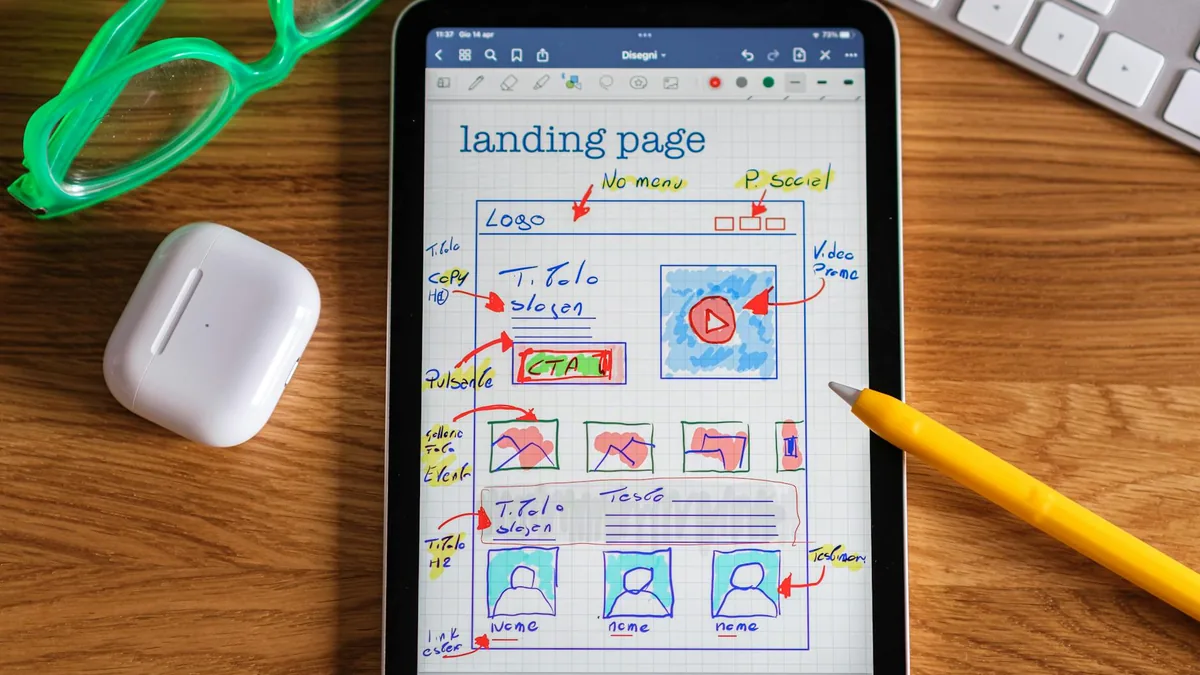
Build a landing page that’s easy to track and optimize. This guide covers a practical structure, tracking parameters, QA checks, and a repeatable optimization workflow for affiliate campaigns.
A good affiliate landing page is one you can measure cleanly, iterate quickly, and connect to revenue events without guesswork. Start with a simple page structure (one offer, one intent), implement consistent click + conversion tracking (UTMs, click IDs, postback/pixels where possible), then run landing page optimization based on segmented data (traffic source, ad set, device). If you can’t explain what changed and what metric moved, your page isn’t “high converting” yet—it’s just unverified.
Landing page workflow snapshot (what to set up first)
| Layer | What to implement | Why it matters for affiliates | Minimum QA check |
|---|---|---|---|
| Page structure | Single primary CTA, clear value prop, one next step | Reduces “multi-exit” leakage and makes tests interpretable | CTA is visible above the fold on mobile |
| URL parameters | UTMs + consistent naming (source, campaign, adset, creative) | Enables reporting by traffic segment and creative | UTMs persist from landing to outbound click |
| Click tracking | Track outbound CTA click as an event (button + link) | Lets you separate “page problem” vs “offer problem” | Event fires once per click (no duplicates) |
| Conversion tracking | Pixel + server-side/postback where available | Improves attribution robustness and reduces blind spots | Test conversion recorded with correct campaign params |
| Redirects & routing | Optional pre-lander → offer routing, geo/device rules | Prevents mismatched traffic and supports compliance flows | No redirect loops; correct destination on mobile |
| Reporting | Daily view: sessions → clicks → conversions by segment | Creates a repeatable optimization cadence | One source of truth for each metric |

Who this landing page approach is for
- Paid traffic affiliates (TikTok/Facebook/native) who need fast iteration without breaking tracking each time they edit a page.
- Media buyers running multiple angles who need consistent naming and segmentation to compare creatives fairly.
- Teams using a tracker + analytics (or planning to) and want a clean handoff between click data and conversion data.
- Anyone building “high converting landing page” candidates through testing—not guessing—using a repeatable QA + reporting loop.
Landing page optimization: the setup details that actually change your decisions
Most landing page optimization problems aren’t “copy issues”—they’re measurement and segmentation issues. Before you iterate on headlines or design, make sure the page produces trustworthy data.
1) Use a two-metric model: click-through and conversion-through
- Landing → Offer Click (CTR-out): tells you if the page is doing its job (pre-selling, filtering, qualifying).
- Offer Click → Conversion (CVR-downstream): tells you if the offer + funnel is converting after the click.
If CTR-out is weak, work on the landing page. If CTR-out is strong but conversions are weak, the bottleneck is usually offer fit, traffic quality, or the advertiser funnel.
2) Standardize parameter passing (or your reports will lie)
At minimum, ensure UTMs persist from the ad click to:
- the landing page URL,
- the outbound click URL, and
- any intermediate redirects (tracker, smartlink, or pre-lander routing).
Common failure modes: stripping query strings on redirects, inconsistent campaign naming, and multiple “final URLs” that break grouping in reporting.
3) Track the CTA click correctly (button + link + deduping)
- Fire the click event on the actual outbound action (not just page view).
- If you have multiple CTAs, either (a) track each with a label, or (b) intentionally reduce to one primary CTA to keep tests clean.
- Deduplicate rapid double taps on mobile to avoid inflated click counts.
4) Segment before you redesign
Many “landing page examples” look different because the traffic intent is different. Segment performance by:
- Source/placement (TikTok feed vs. audience network, etc.)
- Device (iOS vs Android; mobile vs desktop)
- Creative/angle (each promise needs matching page messaging)
- Geo/language (mismatch here often looks like “bad copy”)
Only compare variants inside the same segment; otherwise you’re mixing different user intents and calling it a test.
5) Keep tests “small” so you can attribute lifts
For affiliates, the fastest path to a high converting landing page is usually controlled iteration:
- Change one primary element per test (headline, hero claim, CTA framing, proof block).
- Keep the rest stable (layout, routing, tracking, offer link).
- Log changes in a simple changelog tied to campaign dates in your reporting.

Pros and cons of a tracking-first landing page
- Pro: Faster iteration because you can diagnose whether the page or the offer is the bottleneck.
- Pro: Cleaner reporting across campaigns due to consistent naming and parameter passing.
- Pro: More reusable page templates—swap angles without rebuilding tracking from scratch.
- Con: Slightly more upfront setup (events, redirects, QA) before you “start testing.”
- Con: If you over-instrument, you can create noisy dashboards that slow decisions—track what you’ll actually use.
Final verdict: build the landing page around measurement, then iterate
If you’re running affiliate traffic, your landing page should be designed as a measurement surface as much as a persuasion asset. Start with a simple structure, ensure UTMs/click IDs persist, track outbound clicks and conversions reliably, then optimize by segment (source, device, creative) so you’re not averaging unlike traffic. This workflow is most valuable when you plan to scale spend or run multiple angles—if you’re only sending small, inconsistent traffic, you’ll struggle to separate signal from noise no matter how good the design looks.
FAQ
How do I know if my landing page is the problem or the offer is the problem?
Split the funnel into two steps: landing → offer click (CTR-out) and offer click → conversion (downstream CVR). Low CTR-out points to page/intent mismatch; strong CTR-out with weak conversions usually points to offer fit, traffic quality, or the advertiser funnel.
What events should I track on a landing page for affiliate campaigns?
At minimum: page view, outbound CTA click, and (if possible) the conversion event via pixel/postback. If you add more events (scroll, time on page), use them only if they change a decision in reporting.
Why do my reports disagree between my tracker, analytics, and the affiliate network?
Common causes are missing/stripped parameters on redirects, attribution window differences, ad platform click ID loss, and event deduplication issues. Start by validating the full click path and confirming the same campaign identifiers appear at each step.
If you’re rebuilding your funnel stack, consider documenting your tracking schema (UTMs, click IDs, event names) before you publish new landing pages. It makes optimization and troubleshooting much faster when you scale into more campaigns and creatives.
